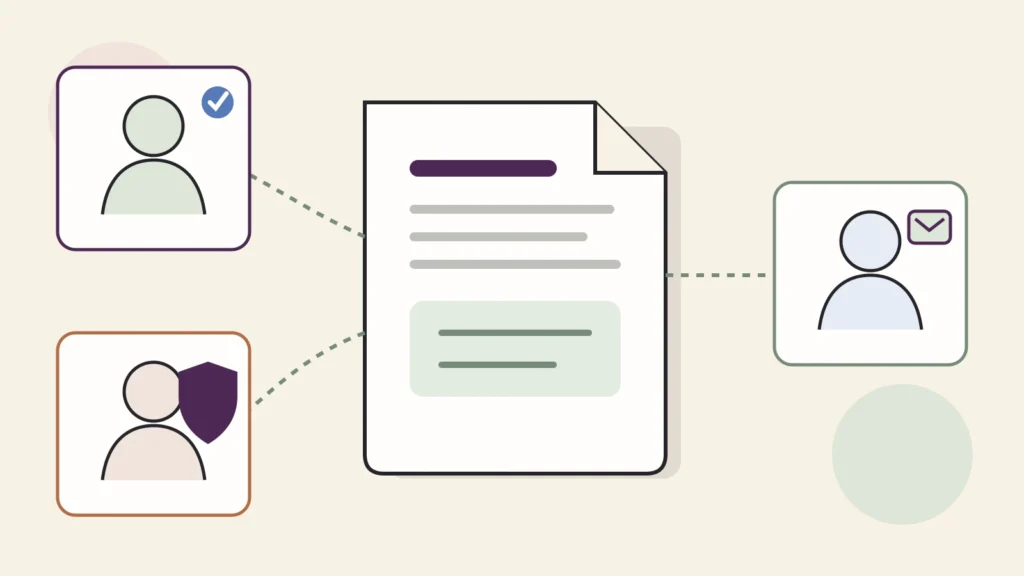
A homeowners insurance payment can be confusing when the check is made payable to both the policyholder and the mortgage company. The second name is usually not an error. A lender or servicer may be listed as the mortgagee or loss payee because the home secures the loan and the insurance proceeds are intended to repair that collateral after covered damage.
The result is a two-payee process: the insurer issues the payment, but the mortgage company may need to endorse the check or manage repair funds before the money reaches the contractor or homeowner. The exact procedure varies. Contact the loan servicer before signing, mailing, depositing, or attempting to cash the check.
Why the mortgage company appears on the claim check
A homeowners policy can identify parties with different interests. The policyholder is insured for covered losses, while a mortgagee has a financial interest in the building that secures the loan. Our guide to named insureds, additional insureds, additional interests, and loss payees explains those roles in detail.
When the dwelling is damaged, both the homeowner and lender have an interest in the repair proceeds:
- the homeowner needs funds to restore the property;
- the insurer needs to pay according to the policy;
- the lender wants the collateral repaired rather than the funds used for another purpose; and
- the check issuer needs the endorsement of every named payee.
New Jersey’s Department of Banking and Insurance tells consumers that property claim checks are often jointly payable and recommends contacting the mortgage company and bank to learn the endorsement and deposit procedure.
First, identify exactly what the check pays
Before dealing with the endorsement, match the check to the insurer’s estimate or payment letter. A single claim can generate separate amounts for:
- dwelling or structural repairs;
- other structures;
- personal property or contents;
- additional living expenses;
- debris removal or emergency work;
- actual cash value or an advance; and
- recoverable depreciation after repairs.
Different types of proceeds may be handled differently. Ask the insurer for a written allocation when the check or explanation is unclear. Understanding actual cash value and replacement cost payments also helps explain why more than one check may arrive.
Step 1: Verify the payees and loan servicer
Read the front of the check exactly. The named institution may be a mortgage servicer rather than the company that originally made the loan, and servicing can transfer. Use the contact information on the most recent mortgage statement or the servicer’s authenticated portal—not a phone number supplied by an unsolicited contractor or caller.
Confirm:
- the current servicer and loan number;
- the exact payee name shown on the check;
- whether every homeowner payee must endorse first;
- whether the check is mailed, deposited at a branch, or uploaded through a loss-draft portal; and
- whether an appointment, notarization, or special endorsement is required.
Step 2: Ask for the complete loss-draft procedure
Many servicers call this the insurance-loss-draft, property-loss, or repair-funds process. Request the written instructions before sending the original check. The package may ask for:
| Common document | Why the servicer may request it |
|---|---|
| Insurance adjuster estimate | Shows the covered repair scope and gross payment calculation |
| Contractor estimate or contract | Identifies who will perform the work, cost, and repair schedule |
| Endorsed claim check | Allows deposit into the required repair or escrow account |
| W-9, license, or insurance details | Supports contractor verification when required by the servicer |
| Affidavit or lien waiver | Helps document payments and reduce construction-lien risk |
| Repair progress request | Starts an interim or final disbursement |
| Inspection authorization | Allows verification that stated work has been completed |
Requirements vary. Do not obtain unnecessary notarizations or send original records until the servicer confirms what is needed.
- Number the attachments and use the same labels in the cover page.
- Keep one complete duplicate packet, including the front and back of any endorsed check.
- Record the date sent, delivery method, recipient or portal confirmation, and expected review time.
- Do not combine unrelated claim payments or checks unless the insurer and servicer instruct you to do so.
A practical packet may include copies of the check, insurer payment letter, current estimate, contractor contract, requested tax or licensing forms, and the servicer’s own loss-draft form. Keep the original documents separate until the instructions say which originals must be delivered. If mailing is required, use the exact address and department supplied by the servicer and retain tracking or delivery evidence.
Before sending the original check, create a packet that another person can understand without reconstructing the claim from scattered messages. Put a short cover page first with the homeowner name, property address, loan number, insurer claim number, check amount, check number, and a list of enclosed documents. Do not place sensitive account information in ordinary email unless the servicer’s authenticated system specifically requires it.
Build a clean loss-draft submission packet
Step 3: Understand whether funds will be released at once or in stages
Some smaller payments may be endorsed and released quickly. Larger losses, delinquent loans, investor requirements, or extensive rebuilding can lead to a monitored repair account. In a staged process, the servicer may release an initial amount, inspect progress, and then release additional draws.
New Jersey consumer guidance expressly notes that some proceeds may be available immediately while other claims are paid in installments as repairs progress. That description is helpful, but it does not establish a universal dollar threshold or inspection schedule.
Ask the servicer for:
- the total amount it received or will hold;
- the initial disbursement amount;
- the number and timing of expected draws;
- the percentage of work required before each inspection;
- who orders and pays for inspections;
- how checks will be made payable;
- what creates a final release; and
- how unused or disputed funds are handled.
Do not promise a contractor a payment date that depends on an inspection or approval outside your control. A written schedule should identify who requests each draw and what happens if the insurer’s scope changes during repairs.
| Repair milestone | Questions to resolve |
|---|---|
| Contract signing | What deposit is due, and is that amount available from the initial release? |
| Materials ordered | Does the contractor require advance payment, and what proof will the servicer accept? |
| Progress work | What completion percentage triggers inspection and the next draw? |
| Substantial completion | Which invoices, lien waivers, photographs, or inspection reports are required? |
| Final release | What closes the repair account, and how are remaining funds or recoverable depreciation handled? |
Once the servicer explains the release process, compare it with the contractor’s payment terms before work begins. A large deposit or early material payment may be difficult to fund if the servicer releases only a smaller first draw. Put the comparison in writing and resolve the mismatch before signing or amending the construction contract.
Match the contractor schedule to the expected draws
Step 4: Coordinate the repair contract with the disbursement schedule
A contractor payment schedule should not require money earlier than the servicer can release it. Before signing, compare the deposit, progress-payment, material, and final-payment terms with the lender’s draw process. Avoid contracts with blank spaces or pressure to assign insurance benefits without understanding the consequences.
The insurer’s approved estimate and the contractor’s price may differ. Follow the supplemental claim process for newly found damage or supported scope differences rather than assuming the mortgage company will cover a shortfall.
Step 5: Keep the insurer and servicer records separate but connected
The insurer decides coverage and issues claim payments. The servicer administers the mortgage and may control release of jointly payable dwelling proceeds. A contractor performs the repair. Keep a folder for each role, then maintain one master ledger showing:
- the insurer’s estimate and every revision;
- the date and amount of each claim check;
- the coverage represented by each payment;
- the date the servicer received the check;
- each requested document and the date supplied;
- inspection dates and completion percentages;
- each disbursement and payee; and
- remaining held funds.
This record is especially useful when replacement-cost payments arrive after completed work or when a proof of loss states an amount that later changes.
State rules can change parts of the process
State law may regulate endorsement, segregation, notice, or release of insurance proceeds for covered mortgage companies, but the rules are not identical.
- Florida example: Section 494.0026 of the 2025 Florida Statutes addresses prompt endorsement and distribution of certain proceeds for mortgagees or assignees within the statute’s scope. It also distinguishes some contents and additional-living-expense proceeds.
- Louisiana example: Louisiana R.S. 6:337 contains state-specific duties involving held insurance proceeds and written requirements for release.
- New Jersey guidance: The state banking and insurance department directs consumers to contact their mortgage company and bank for the exact endorsement and monitoring process.
These examples show why a general article cannot tell every homeowner exactly when funds must be released. The loan documents, servicing status, payees, state, and type of proceeds all matter.
What about contents or additional living expense money?
A lender’s secured interest is usually strongest in the building. Some state laws distinguish proceeds for personal property or additional living expenses, and insurers sometimes issue those coverages separately. But do not assume a mixed check can be divided without authorization.
Ask the insurer to issue a coverage breakdown or separate check when appropriate, then ask the servicer how it treats each category. Do not alter a check or deposit only part of a jointly payable instrument.
A fictional example
A storm-damage claim produces a dwelling check payable to the homeowner and mortgage servicer. The homeowner calls the number on the current mortgage statement and obtains the loss-draft packet. The servicer asks for the insurer’s estimate, contractor contract, endorsed check, and an initial repair affidavit. It deposits the funds into a monitored account, releases a first draw, and schedules a progress inspection before the next draw.
The same claim also includes a separate additional-living-expense check payable only to the homeowner. This example illustrates one possible structure, not a rule for every lender or state.
When the process stalls
Start with a written status request to the servicer’s property-loss department. Identify the loan number, check amount, date received, completed requirements, and the specific release or endorsement still pending. Ask for any missing requirement and the authority for it.
If the issue concerns insurance coverage or the insurer’s payment, contact the insurer or state insurance department. If it concerns mortgage servicing or release administration, use the servicer’s escalation and complaint process and the regulator appropriate to that institution. Preserve the documents before escalating.
Never give an original jointly payable check to an unsolicited contractor, door-to-door representative, or caller who promises to “handle everything.” A contractor may legitimately be involved in repair documentation, but that does not automatically authorize the contractor to endorse, deposit, assign, or control insurance proceeds. Read any authorization or assignment separately from the repair contract.
A jointly payable check is a negotiable instrument, so avoid casual handling. Do not sign it until the servicer confirms the order and form of endorsement. Photograph or scan the front before endorsement and both sides afterward. If the original must be mailed, follow the servicer’s verified instructions, use a trackable method, and retain the delivery record and packet copy.
Protect the original check and endorsement record
Frequently asked questions
Can I deposit a check made out to me and my mortgage company?
Usually every payee must properly endorse a jointly payable check. Contact the servicer and bank before attempting a deposit.
Why is the mortgage company holding my money?
The loan and insurance documents may allow repair proceeds to be monitored so the damaged collateral is restored. State law and servicing rules can regulate how the funds are handled.
How long will release take?
There is no single national period. Timing depends on the institution, applicable law, check size, loan status, documentation, repair stage, and inspections. Ask for written milestones and follow up on missing items.
Can the contractor take the check directly?
Do not transfer a jointly payable check or sign an assignment based only on a contractor’s request. Follow the insurer’s and servicer’s verified process and understand any contract before signing.
What happens after the mortgage is paid off?
Tell the insurer if the payee information is outdated and provide evidence requested to update the claim payment. Do not alter the payee line yourself.