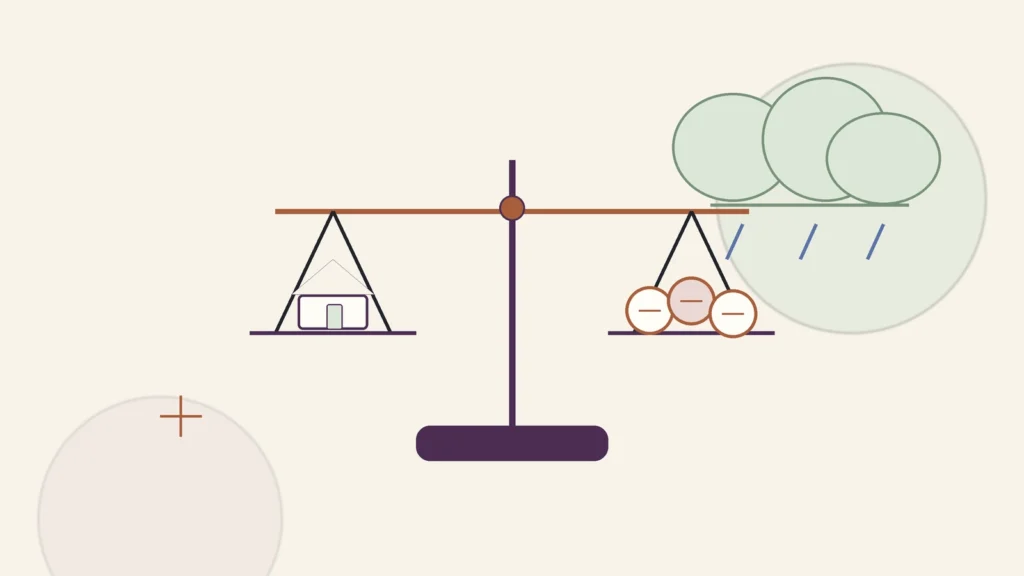
Owning a condo means your property is insured by two separate policies working together: the association’s master policy, and your own individual unit-owner’s policy, commonly called an HO-6. Where one stops and the other starts depends on which type of master policy your association carries.
Because the boundary can differ from one community to another, reviewing the master policy and governing documents is essential before assuming what the HO-6 must cover.
Two policies, one building
According to Washington’s Office of the Insurance Commissioner, condo living typically involves two policies working in tandem: the community’s master policy (funded through owner dues) and the individual owner’s HO-6 policy. Between them, they’re meant to cover losses both inside and outside an individual unit — but only if the coverage is sized correctly on both sides.
The three common master-policy forms
Which parts of your unit’s interior the master policy insures — and therefore which parts your HO-6 needs to cover — depends on the form used by the association. Terminology varies, but the categories below follow Washington’s insurance regulator: all-in, all-in excluding improvements or betterments, and bare walls/walls out.
Bare walls (also called “walls-out” or “studs-out”)
The master policy covers the building exterior, common areas, and structure only up to the unfinished interior surfaces. Everything inside that boundary — drywall, paint, flooring, cabinets, built-in fixtures — is the unit owner’s responsibility to insure through the HO-6.
All-in, excluding improvements or betterments
The master policy covers the structure and the unit’s original interior finishes, but not later owner upgrades or improvements. Those changes may remain the unit owner’s responsibility under the HO-6, depending on the governing documents and policy wording.
All-in
The broadest form. The master policy covers the structure, original fixtures, and owner improvements or upgrades. Under this form, the HO-6’s role may narrow mainly to personal property, additional living expenses, personal liability, and any gaps or master-policy deductible responsibility assigned to the unit owner.
The exact labels and boundaries can vary by insurer and by your association’s own declaration documents, and in some states, statute affects how much interior responsibility can be pushed onto individual owners. The master policy and the association’s governing documents should be reviewed together to identify the actual boundary. Request current copies from the association or property manager if you do not already have them.
Loss-assessment coverage: what it can and cannot do
If a covered loss exceeds what the master policy pays — a major fire in a common area, for example — the shortfall is often divided among unit owners as a special assessment. Loss assessment coverage on your HO-6 is designed to pay your individual share of that assessment.
According to Washington’s insurance regulator, this coverage matters specifically when the cause of the shortfall is a type of loss your own HO-6 policy would otherwise cover — the two are connected, not independent.
Loss-assessment coverage is not unlimited and does not apply to every assessment. The declarations page and endorsement wording show the limit, deductible, covered causes of loss, and any restrictions. Some policies allow the limit to be changed through an endorsement, but availability and cost vary.
Florida law illustrates how a state can set its own floor on this coverage: for policies issued or renewed on or after July 1, 2010, Florida requires at least $2,000 in property loss-assessment coverage for qualifying assessments arising from the same direct property loss, with a deductible of no more than $250 for that coverage. This is a Florida-specific statutory requirement, not evidence of a nationwide minimum — other states may set different rules or none at all.
What an HO-6 typically includes, beyond the interior-boundary question
- Dwelling/interior coverage — for the parts of your unit’s interior not already insured by the master policy, based on your association’s specific form.
- Personal property — your furniture, electronics, clothing, and similar belongings.
- Personal liability — protection if you’re found legally responsible for someone else’s injury or property damage. The deeper mechanics of this coverage, including common exclusions, are covered in Personal Liability Coverage in Homeowners Insurance, which applies to condo owners in largely the same way it applies to single-family homeowners.
- Loss of use — additional living expenses if your unit becomes temporarily unlivable after a covered loss.
- Loss assessment — your share of a covered special assessment, as described above.
For the broader six-coverage framework this list is drawn from, What Does Homeowners Insurance Cover? walks through each piece in more depth.
A fictional example, for illustration only
Consider a hypothetical 50-unit condo building, entirely invented for this example, where a common-area fire causes damages exceeding the association’s master policy limit by $500,000. If that shortfall were divided evenly among all 50 units, each owner’s hypothetical share would be $10,000.
An owner with a $1,000 applicable loss-assessment limit could face as much as $9,000 of the hypothetical assessment beyond that limit. An owner with a higher limit might be eligible for more coverage, but only if the assessment arose from a covered cause and all policy conditions, deductibles, and exclusions were satisfied. This example is entirely fictional and illustrates only the mechanics of loss-assessment exposure — not any real building, association, or claim outcome.
Governing-document and declarations-page checklist
- What category does my association’s master policy use — all-in, all-in excluding improvements or betterments, bare walls/walls out, or another form defined in its documents?
- What is the master policy’s total limit, and does it reflect current rebuilding costs?
- What is my own HO-6’s loss-assessment limit, and does it reflect my building’s size and risk?
- Does my HO-6’s interior coverage match what my association’s specific form leaves uninsured?
- Have I actually requested and read my association’s declaration and governing documents, rather than assuming a general pattern applies?
- Is there a deductible on the master policy that could be assessed back to me individually, and does my HO-6 address that? For a broader look at how deductibles work in general, see How Homeowners Insurance Deductibles Work
Common misunderstandings
Misunderstanding: “The HOA’s insurance covers my whole unit, so I don’t need my own policy.”
More accurate: Even under the broadest “all-in” master-policy form, personal property, personal liability, and loss of use are still generally the unit owner’s own responsibility through an HO-6.
Misunderstanding: “Every condo master policy works the same way.”
More accurate: Common master-policy categories allocate responsibility differently, and the exact boundary comes from the master policy, governing documents, and applicable law—not a universal label.
Misunderstanding: “My HO-6’s default loss-assessment limit is definitely enough.”
More accurate: The declarations page shows the issued limit, but whether an assessment is covered also depends on its cause, the master policy, the association documents, and the HO-6 wording.
Important limitations
This article explains commonly used condo and HO-6 insurance concepts for general education. It is not personalized insurance, legal, or financial advice, and it does not describe any specific insurance product, association’s documents, or guaranteed claim outcome. Master-policy forms, HO-6 limits, loss-assessment rules, and applicable state statutes vary significantly, and your association’s governing documents, your own policy language, and applicable state law control any real situation.
FAQ
Who decides which master-policy form my association carries?
The form and coverage boundary are established through the association’s insurance arrangements and governing documents, subject to applicable state law. The board or property manager can provide the current documents, but a general article cannot determine the answer for a specific community.
Can I increase my HO-6’s loss-assessment limit?
In many cases, yes, often through an endorsement to your existing policy. The specific process and cost depend on your insurer.
Does my HO-6 cover damage caused by a neighboring unit?
It depends on the cause, your association’s master-policy form, and your own policy’s terms — this is exactly the kind of question worth confirming with your insurer rather than assuming.
Official sources
- Washington Office of the Insurance Commissioner, Learn how condo insurance works
- Washington Office of the Insurance Commissioner, Filing a condo unit insurance claim
- Florida Statutes § 627.714, Residential condominium unit owner coverage; loss assessment coverage required
Conclusion
A condo owner’s protection only works if both halves — the master policy and the HO-6 — actually fit together, and that fit depends on the master policy, documents specific to the building, the HO-6 wording, and applicable law—not a general pattern alone. Requesting your association’s master-policy declarations and governing documents is a more reliable step than assuming your HO-6 automatically lines up.
Once you’ve confirmed which form your association carries, reviewing your own HO-6 declarations page against it — and understanding how endorsements can adjust limits like loss assessment — is the practical next step.