The documents needed for an insurance claim generally fall into a few categories: your policy and contact information, a timeline of what happened, photos or video, proof of ownership or value, any official reports, and a log of your communications with the insurer. Exactly which of these matter most depends on the type of loss.
Gathering and organizing this material early does not guarantee that a claim will be approved or paid at a particular amount. It does make it easier for an insurer to evaluate what happened and reduces the chance you will be asked to track down the same information twice.
Why Documentation Matters — and What It Doesn’t Do
When you report a loss, your insurer needs enough information to understand what happened, confirm it against your policy, and estimate what occurred. Clear documentation helps that process move more smoothly and gives you your own record if questions come up later.
It’s worth being direct about the limits, too. Even thorough documentation does not by itself determine whether a loss is covered — that depends on your policy’s terms, exclusions, and endorsements. Documentation supports a claim; it does not decide it.
Document Safely Before Major Cleanup
Prioritize personal safety and emergency instructions first. Once it is safe, take photos or video and make a written list before major cleanup or disposal. Make reasonable temporary repairs needed to prevent further damage, keep receipts, and — when safe and practical — retain damaged items until the insurer says an inspection is not needed. This preserves evidence without delaying urgent safety work.
The Core Document Categories
Policy and contact information. Your policy number, the insurer’s claims phone number, and your own current contact details. Your insurance declarations page is often the quickest place to confirm the policy number, policy dates, and listed coverage types before you report a loss.
Incident timeline. A written account of what happened and when, including witness names and contact information where relevant, and any police report or incident number if one was filed.
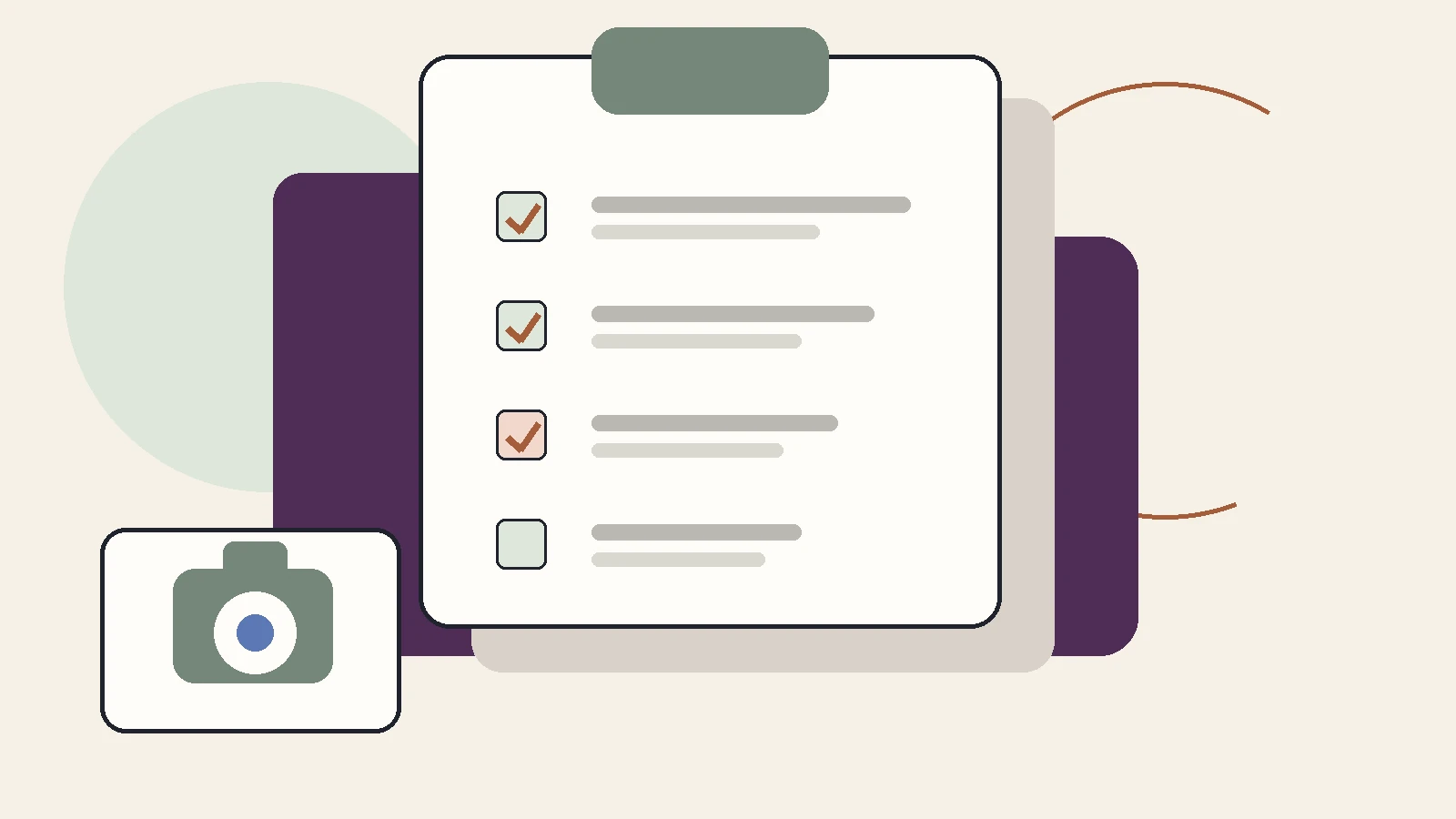
Photos and video. Images and video of the damage, taken as soon as it’s safe to do so, ideally before repairs or cleanup begin. Photograph both the overall scene and close-ups of specific damage.
Proof of ownership and value. Receipts, purchase records, photos of items before the loss, or appraisals for higher-value belongings. A home inventory — covered in our home inventory guide — makes this step considerably easier if you built one in advance.
Repair estimates. Written estimates from contractors or repair shops describing the scope and projected cost of repairs.
Official reports, where applicable. A police report for theft, vandalism, or certain auto accidents; a fire department report for a fire loss. Not every claim requires one, but when an official report exists, it’s worth including.
Communications log. Notes on every call or message with your insurer or adjuster — date, who you spoke with, and what was discussed or requested. Ask who to contact if you have follow-up questions, and write that down too.
Temporary or additional living expense records. If a covered loss makes your home uninhabitable, keep receipts for temporary lodging and other increased living costs. Many policies may cover eligible additional expenses above your normal household spending, but covered categories, limits, and calculation methods depend on the policy.
Copies, not originals. Send copies of your documents to your insurer whenever that’s an option, and keep the originals somewhere safe. This matters even more for federally backed flood claims, discussed below.
Step-by-Step: Organizing Your Claim Documentation
- Document the scene first. Photograph and list damage before you clean up or discard anything, and keep damaged items if it’s safe and practical to do so.
- Report the loss and get a claim number. Contact your insurer as soon as reasonably possible and record the claim number, the representative’s name, and the date. For a vehicle loss, the next stages are explained in our guide to what happens after an auto insurance claim is filed.
- Build your evidence file. Combine your timeline, photos, receipts, and any official reports into one folder — physical, digital, or both.
- Track every communication. Log calls and messages as they happen rather than trying to reconstruct them later.
- Respond to information requests promptly. Insurers frequently ask for additional documentation partway through a claim; keeping a running list of what’s been requested and what’s been sent helps avoid delays.
- Keep copies of everything you submit. Store your originals separately from what you send to the insurer.
- Back up your files somewhere outside your home. Use a password-protected cloud folder, encrypted storage, or a secure copy with a trusted person. Claim files can contain policy numbers, addresses, receipts, and other sensitive information, so avoid unsecured public links or shared devices.
Practical Checklist by Document Type
| Category | Examples | Why It Helps |
|---|---|---|
| Identifying information | Policy number, insurer contact, your contact details | Speeds up filing and follow-up |
| Timeline | Written account, witness contacts, date/time of loss | Establishes what happened and when |
| Visual evidence | Photos, video, before-and-after images | Shows the extent of damage |
| Proof of ownership/value | Receipts, appraisals, home inventory | Supports value of lost or damaged items |
| Official reports | Police report, fire report, incident number | Provides third-party documentation where relevant |
| Repair estimates | Contractor or shop estimates | Documents projected cost of repair |
| Communications log | Call notes, emails, names and dates | Creates your own record of the claim’s progress |
| Expense records | Receipts for temporary lodging or meals | Supports possible loss-of-use reimbursement |
Common Mistakes and Misunderstandings
- Discarding damaged items before documenting them. Once evidence is gone, it can be difficult or impossible to recreate.
- Sending original documents instead of copies. If something is lost in transit, an original can be far harder to replace than a copy.
- Assuming a thorough file guarantees a specific outcome. Documentation supports a claim; it does not override the terms of the policy.
- Not tracking who said what. Verbal conversations with an adjuster can be easy to misremember weeks later without notes.
- Waiting to see if more information is needed. Insurers often request additional documentation; organizing early makes it easier to respond quickly when they do.
Questions to Ask Your Insurer, Agent, or Regulator
- What specific documents do you need for this type of claim?
- Is there a deadline for submitting documentation, and what happens if I need more time?
- Should I send originals or copies, and how should I send them securely?
- Who is my point of contact, and how should I reach them with follow-up questions?
- If my claim is denied or only partially paid, how do I get a written explanation?
- If I disagree with the outcome, what is the appeal or dispute process, and can I also contact my state insurance regulator?
A Note on Flood Claims and the National Flood Insurance Program
Flood losses covered by the federal National Flood Insurance Program (NFIP) follow their own documentation rules, separate from typical homeowners or auto claims. Under the Standard Flood Insurance Policy, policyholders are generally required to submit a signed and sworn proof of loss, with supporting documentation, within 60 days of the loss. FEMA may issue a written extension for a specific disaster, so policyholders should verify the current deadline rather than assume an extension applies. NFIP guidance also specifically advises sending photocopies rather than original documents and keeping originals safe. If you have NFIP flood coverage, treat this federal timeline and its documentation requirements as a separate lane from your other insurance paperwork.
Documentation Does Not Guarantee Coverage or Payment
This is worth stating plainly: gathering strong documentation improves your ability to support a claim, but it does not guarantee that a loss is covered or that any specific amount will be paid. Coverage depends on your policy’s terms, conditions, and exclusions. State insurance regulators can review whether an insurer handled a claim fairly, but they generally cannot order a specific payout or determine liability on your behalf — that authority sits with the policy contract and, where disputes arise, with negotiation, appraisal, or the courts.
A Hypothetical Example
Imagine a homeowner named Priya experiences a kitchen fire. She photographs the damage before any cleanup, lists the appliances and cabinetry affected, keeps the fire department’s incident report, and saves every receipt for the hotel she stays in while repairs are underway. When her insurer asks for additional detail about the range’s age and purchase price a week later, she already has that information organized and sends it the same day. This organized approach doesn’t determine whether her claim is approved, but it removes friction from the process. This example is hypothetical and does not describe a real claim, insurer, or outcome.
Building a Habit, Not Just a Folder
The best time to think about claim documentation is before you need it. Knowing where your policy information is stored and understanding the general shape of a claim both make the documentation step less stressful when a loss actually occurs.
Keep your evidence file organized as you go, rather than trying to reconstruct it after the fact. A simple folder — physical or digital — with copies of everything you send, plus a running communications log, is often the single most useful habit a policyholder can build.
Official Sources
- National Association of Insurance Commissioners, "Navigating the Claims Process: Recover and Rebuild": View official source
- Texas Department of Insurance, "Steps to getting your home or car insurance claim paid": View official source
- Federal Trade Commission, "How To Organize Your Important Papers Before a Disaster Strikes": View official source
- Federal Trade Commission, "How To Get Back on Track After a Weather Emergency": View official source
- Consumer Financial Protection Bureau, "Start recovering and rebuilding your financial life": View official source
- FEMA / National Flood Insurance Program, Flood Insurance Claims Handbook (F-687): Open official PDF
- FEMA / National Flood Insurance Program, Proof of Loss appeal decision example: View official source
- South Carolina Department of Insurance, Consumer Services: View official source